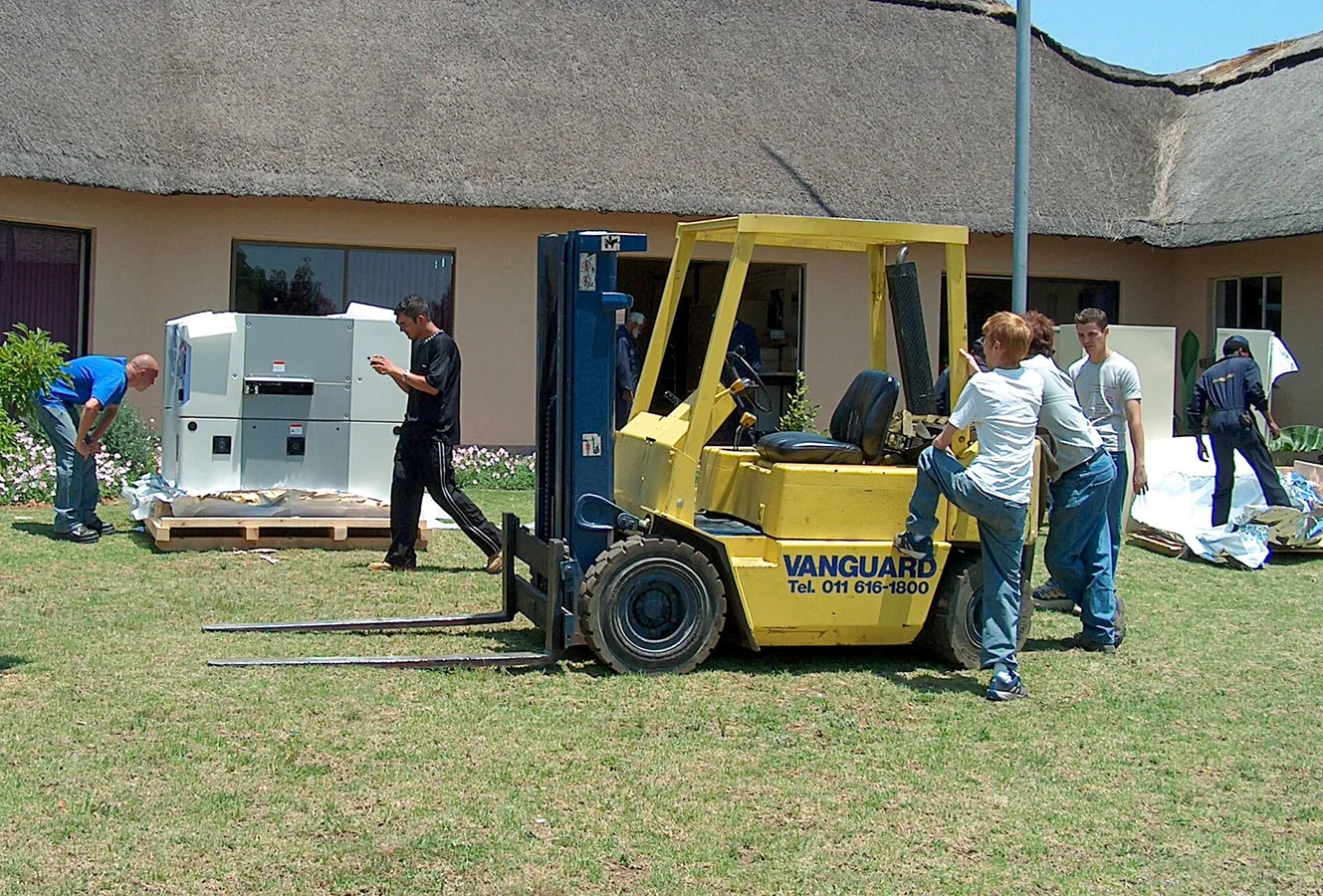
Liquid petroleum gas (LPG / propane) is a common forklift fuel indoors and outdoors because cylinders swap quickly and engines can be used where battery charging infrastructure is limited. Fleet managers care about reliable fills and cylinder condition — not grill-cage marketing.
Cylinders and fills
Forklift service usually uses dedicated LPG cylinders (often horizontal-mount designs) filled at industrial or AFDC-listed propane stations. Ask whether the site fills forklift bottles, what fittings they support, and whether you need an account. AFDC primary stations are more likely to offer vehicle-rate fills; confirm forklift service by phone.
Station data fields (nozzles, hours, access) come from the AFDC propane locator. Browse our map or state hubs below.
Workplace safety pointers
- Train operators on cylinder change-out and leak checks.
- Store spares upright in ventilated areas per supplier and OSHA / local rules.
- Never use a damaged or out-of-qualification cylinder.
OSHA publishes powered industrial truck requirements (29 CFR 1910.178) and related guidance at osha.gov. Propane fuel context: AFDC propane basics.
Cost baseline
Fleet cost depends on contract rates. For a rough gallons × $/gal sketch using EIA residential prices as a public baseline, open the calculator and override $/gal with your vendor quote. Trends: EIA charts.
Find a station near you
Open the nationwide map and click Use my location to center nearby AFDC propane stations. Or jump to busy state hubs:
- Texas · California · Florida
- Ohio · Michigan · Pennsylvania